Sleep Tracker Buying Guide: Ring, Watch, Mat, or Simple Alarm Data?
Choose a sleep tracker by comfort, battery life, sensor limits, subscription cost, and whether the data will change your routine.
For readers comparing sleep-product options before buying.
Buyer's Guide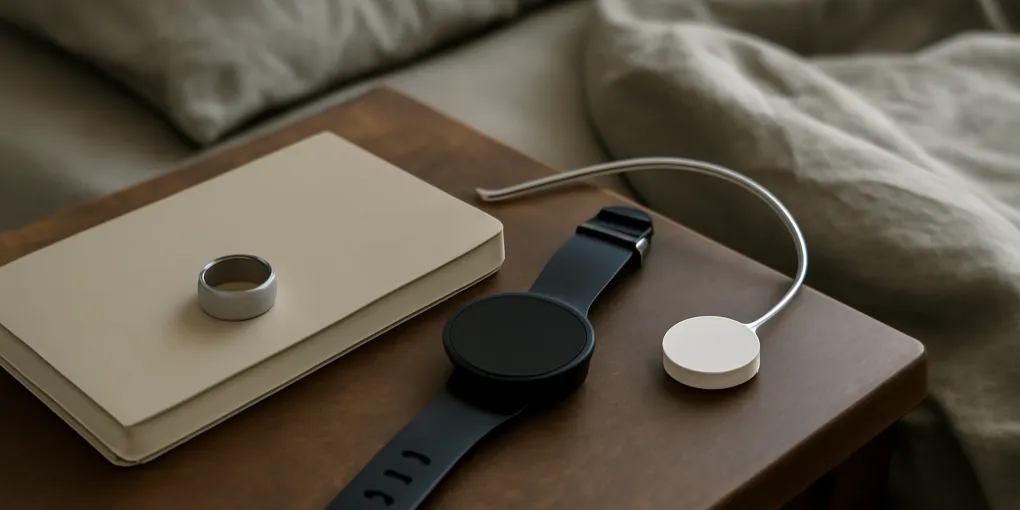
Oura Ring 4
Best low-profile wearableProduct type: smart ring sleep tracker
Quick picks
| Product | Key Specs |
|---|---|
| See price on Amazon |
|
| See price on Amazon |
|
| See price on Amazon |
|
Product availability, certifications, and retailer details can change; check the current Amazon page before buying.
Sleep trackers are best treated as trend tools, not sleep lab equipment. They can make bedtime, wake time, restlessness, and heart-rate trends easier to notice. They are weaker at telling you exactly how many minutes you spent in each sleep stage. The right product is the one you will wear or maintain consistently, with a subscription and charging routine that will not annoy you into quitting.
Sleep trackers are useful only when the form factor fits your night and the data changes a decision the next morning. Compare rings, watches, mats, and simpler alarms by comfort, battery routine, app clarity, and what you will actually do with the trend data.
Quick picks
- Choose a ring for low-profile wear: Search Amazon for Oura Ring 4 when low-profile wearable comfort matters more than a screen.
- Choose a watch if you already use fitness data: Search Amazon for Fitbit Charge 6 sleep tracker when you already wear a watch and want sleep data tied to alarms or training.
- Choose a mat if charging wearables is the blocker: Search Amazon for Withings Sleep tracking mat when you want passive tracking without a ring or watch on your body.
Comparison shortlist
| Buy/search action | Best fit | Main caveat |
|---|---|---|
| Search Amazon for Oura Ring 4 | Measuring the actual bedroom problem before spending more | Check dimensions, cleaning instructions, and return terms before ordering. |
| Search Amazon for Fitbit Charge 6 sleep tracker | Changing the layer closest to the sleeper | Avoid products that hide basic materials or warranty exclusions. |
| Search Amazon for Withings Sleep tracking mat | Solving the specific comfort bottleneck | Do not let a gadget replace fixing obvious light, sound, or climate problems. |
What consumer sleep trackers are good at
Consumer trackers are most useful for bed timing, wake timing, restlessness trends, and routine consistency. Treat stage estimates as rough signals. A week of late bedtimes is actionable; one night of strange deep-sleep scoring is usually not worth changing supplements, training, or medical decisions.
Comfort and charging are buying criteria
The tracker has to survive real life. A bulky watch may bother wrist sleepers. A ring may be easier overnight but awkward for lifting or swollen fingers. A mat avoids wearables but adds setup under the mattress. Charging cadence matters because missed nights make trends less useful.
Subscriptions and data export
Look beyond the device price. Some trackers hide readiness scores, long-term trends, or coaching behind subscriptions. Check whether you can export data, pause membership, or still see basic sleep timing without paying. A cheaper tracker can cost more over two years if the app is required.
How to act on the data without overreacting
Pick one behavior to test at a time, such as a steadier wake time or less late caffeine. Watch the trend for two weeks rather than chasing daily scores. If the data creates anxiety or makes you feel worse, simplify to bedtime and wake-time tracking only.
Practical score for this purchase
| Criterion | Weight | How to apply it |
|---|---|---|
| Research | 30% | Use product specifications and room observations before trusting broad claims. |
| Evidence quality | 25% | Give more weight to measurable fit, material, noise, light, or climate details than to vague comfort language. |
| Value | 20% | Include accessories, subscriptions, replacement parts, and return friction. |
| User signals | 15% | Keep the product only if it improves the exact morning or bedtime problem you recorded. |
| Transparency | 10% | Prefer brands that publish dimensions, materials, care instructions, warranty limits, and trial terms. |
Accuracy expectations by product type
A ring or watch can estimate sleep from movement, heart rate, and related signals, but it does not read brain waves like a sleep lab. That means the bedtime and wake-time trend is usually more actionable than the exact sleep-stage pie chart. If the tracker says you had little deep sleep but you feel fine and your schedule is stable, do not overhaul your routine based on one colored graph. If it shows that your bedtime varies by two hours across the week, that is a more useful signal.
Rings are often easier to wear overnight because they have no screen and less wrist bulk. Watches can be better if you already use workout, alarm, or health notifications during the day, but charging can become the failure point. Under-mattress mats avoid wearing anything, yet they may struggle when two people or pets share the bed. Before paying for a subscription, check whether the free tier keeps the trends you care about, whether data export exists, and whether the app explains confidence or limitations in plain language.
Privacy and alarm features
Sleep data can reveal schedules, travel, illness, alcohol use, and stress patterns. Before buying, check whether the app lets you delete data, export reports, and use the device without sharing more than necessary. If the product requires a cloud account for every useful feature, that may be acceptable, but it should be a deliberate choice rather than a surprise after purchase.
Device format changes the data you will actually use
A ring is usually the least intrusive wearable if you dislike sleeping with a watch, but sizing matters and swollen fingers can make it uncomfortable. A watch gives richer daytime context and alarms, yet the screen, strap, and charging schedule can become the reason it leaves your wrist. A bed mat avoids wearables entirely and can work for people who forget to charge devices, but it is less useful for travel and may struggle when two sleepers, pets, or shifting bed positions confuse the signal. A simple alarm or sleep log can be better if your real problem is bedtime consistency rather than biometric detail.
Subscription cost is part of the purchase. Some trackers show the most useful trends only behind a membership. Others work without fees but offer fewer recovery-style interpretations. Decide whether you need raw timing, temperature trends, snore cues, or smart alarms before comparing dashboards. If you only want a quieter wake-up, a sunrise alarm may be a better buy than a tracker. If you want to catch schedule drift, any device that reliably records sleep and wake times may be enough.
How to avoid data anxiety
Sleep trackers are estimates, not medical sleep studies. Use them to spot patterns across weeks, not to grade one bad night. A useful dashboard changes behavior: it shows that late caffeine, alcohol, heat, travel, or inconsistent wake times line up with worse mornings. A bad dashboard creates worry without a clear action. Turn off readiness notifications if they make you feel behind before the day starts. Keep the device if it helps you protect a bedtime, dim lights earlier, or choose a better alarm window. Return it if it turns normal sleep variation into a daily score chase.
Privacy and sharing checks
Before buying, read what the app collects, whether data can be exported, and whether the account can be deleted. Sleep data can reveal schedules, travel, illness, and household routines. If you share screenshots with a coach or clinician, crop unrelated metrics and remember that consumer devices can misclassify wake, REM, and light sleep. For couples, ask whether one partner’s phone, Bluetooth, or mat placement is required every night. The best tracker is the one that stays charged, stays comfortable, and gives you one or two decisions you can act on.
Battery and charging reality
Battery life is not a small detail for sleep tracking. A watch that needs evening charging can miss the exact window you bought it to measure. A ring with multi-day battery life is easier until you forget the charger while traveling. A bed mat avoids wearable charging but depends on stable placement and Wi-Fi. Choose the format whose maintenance fits your actual nightstand routine.
One final purchase check: confirm the product dimensions, care rules, seller return terms, and whether the item can be cleaned or adjusted after the first week. Those practical details decide whether the sleep product remains useful after the first comfortable night.
FAQ
Are sleep trackers accurate?
They are useful for trends such as bedtime, wake time, and restlessness. They are less reliable for exact sleep-stage minutes, so do not treat one nightly score as a diagnosis.
Is a ring better than a watch for sleep?
A ring is often less intrusive overnight, while a watch can be better if you already use daytime fitness features. Choose the device you will actually charge and wear.
Should I pay for a sleep-tracker subscription?
Pay only if the subscription changes what you will do. Check which trends remain free, whether export is available, and how much the membership adds over two years.