Mattress Encasement vs Protector: Which Barrier Fits Your Bed?
Choose a six-sided mattress encasement or fitted protector by coverage, zipper design, depth, laundry burden, and bedbug-label limits.
For readers comparing sleep-product options before buying.
Buyer's Guide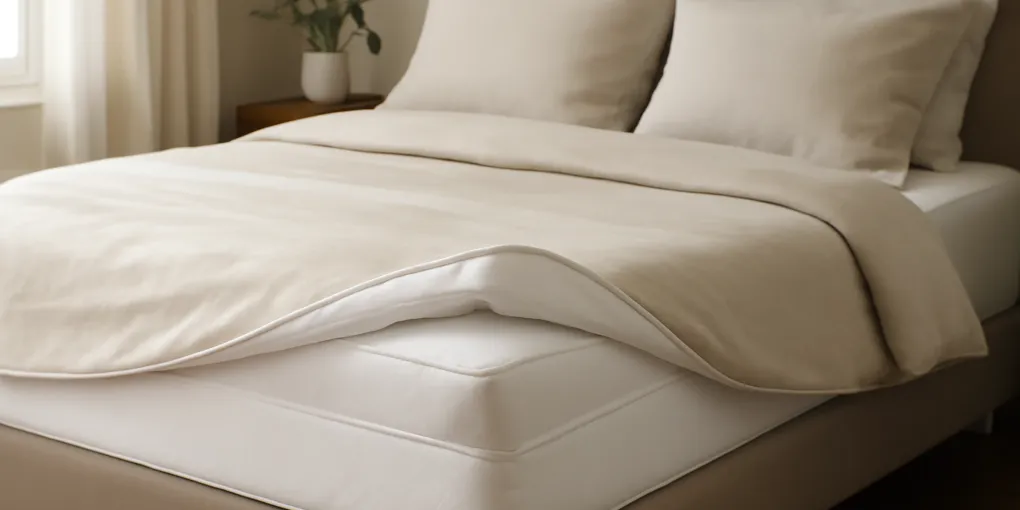
Six-sided zippered mattress encasement
Best full-mattress coverageCoverage: six sides, with a zipper closure
Quick picks
| Product | Key Specs |
|---|---|
| See price on Amazon |
|
| See price on Amazon |
|
Product availability, certifications, and retailer details can change; check the current Amazon page before buying.
A mattress encasement is a zippered cover that wraps the top, bottom, and four sides of a mattress. A fitted protector covers the sleeping surface and usually uses a skirt like a fitted sheet. They solve different ownership problems: choose an encasement when full-mattress coverage is the job; choose a fitted protector when you need a layer that can come off quickly after a spill or sweaty night.
The confusing part is that marketplace titles often use “cover,” “protector,” and “encasement” interchangeably. Ignore the title and check the product photos and specification panel for six-sided coverage, the actual mattress-depth range, zipper construction, care limits, and the specific claim being made.
Quick pick
- Need full coverage: check current six-sided mattress-encasement options when the sides and underside should stay covered, not merely the sleep surface. Measure the mattress height before ordering; a too-tight encasement strains the zipper and can change the feel of foam.
- Need fast laundry rotation: check current fitted waterproof-protector options for routine spills, pets, or guest use. It is the easier layer to strip and wash, but it cannot protect the underside of the mattress.
These are bounded shopping paths, not claims that every current listing has the same barrier performance. Confirm the selected size, coverage diagram, care label, seller, return terms, and price before checkout.
The practical difference
| Your job | Better first purchase | What to verify |
|---|---|---|
| Keep all mattress surfaces covered for a long stretch | Six-sided encasement | Zipper closure, full depth range, six-sided photos |
| Wash after spills without lifting the mattress | Fitted protector | Pocket depth, membrane care, surface noise |
| Cover a foam mattress plus a topper | Usually fitted protector over the topper | Whether the stated pocket depth includes the topper |
| Add a label-supported pest barrier | Exact encasement with that stated claim | Product label, zipper design, installation instructions |
| Protect a guest-room sleep surface | Fitted protector | Washer and dryer limits, replacement cost |
Buy an encasement when side and underside coverage matter
An encasement stays under the fitted sheet and is meant to be installed less often than a protector. The payoff is coverage: the mattress does not have exposed side panels or an exposed underside. The cost is installation. On a queen or king, turning a heavy mattress to work the cover over each corner can be a two-person job. Do not force a zipper around a mattress that exceeds the stated depth range.
For an encasement, inspect these details before buying:
- Finished depth range: measure the mattress from bottom edge to top surface, including a topper only if the encasement will cover it too.
- Zipper location and stop: a long zipper makes installation easier; the closing end should not leave a wide unprotected gap.
- Six-sided diagram: do not assume “full coverage” means the underside is included.
- Fabric and barrier description: waterproof, water-resistant, and fabric-only covers are different products.
- Care instructions: a king encasement may not fit a home washer even when the label allows machine washing.
The U.S. Environmental Protection Agency says that encasements can be part of an integrated bed-bug management approach, but it also emphasizes inspection and other control measures. Do not treat a generic encasement as an infestation cure, and do not rely on a pest claim unless the exact product makes it and provides supporting directions.
An encasement also needs periodic inspection after installation. Check the zipper end, seams, and exposed corners for tears or pulled fabric whenever you rotate bedding. If the product is being used as part of a pest-control plan, follow the product directions and the pest professional’s timeline before removing it. Opening an encasement early can defeat the containment job it was selected to do.
Buy a fitted protector when removal speed matters
A fitted protector is the more practical surface barrier for normal ownership: a spill, a child’s bed, pet accidents, night sweating, or a guest room. It can go into the wash without lifting the mattress, and keeping a second one makes laundry rotation realistic.
The tradeoff is incomplete coverage. The skirt covers the sidewalls only while the protector is fitted; it does not seal the underside. A waterproof membrane can also affect heat, rustle, stretch, and how a pressure-relieving mattress feels. If the bed became noisier or warmer after you added a protector, remove it for one night before deciding that the mattress itself is the problem.
For a fitted protector, check the pocket range against the real stack height. A 12-inch mattress plus a 3-inch topper is a 15-inch job, not a “queen” job. Shallow pockets pull at corners and make the surface bunch. Extremely loose pockets can shift beneath smooth sheets.
For more on choosing a low-noise waterproof surface layer, see our mattress protector checklist for hot sleepers. If the mattress has a visible valley or failing edges, a barrier cannot fix support; use the mattress topper vs new mattress checklist before adding more layers.
Can you use both?
Yes. The common two-layer setup is an encasement directly around the mattress and a fitted protector above it. The encasement remains in place for long-term coverage. The fitted protector handles the routine cleaning job. This can make sense for a costly mattress, but it adds fabric and may change the sleep surface.
Before committing, make the bed with both layers and your usual fitted sheet. Lie in your normal position, roll over, and check whether the corners pull tight or the layers make a crinkling sound. Then test the washing plan: the top protector needs to be easy enough to clean after the messes you actually expect.
Installation details that change the outcome
Install an encasement on a clean, fully dry mattress. Before opening packaging, confirm the label matches both the mattress size and its measured depth. On a queen or king, work with a second person and lift one corner at a time; dragging a heavy mattress across the frame can damage the frame or strain the cover. Keep the zipper on an accessible side if possible, then run a hand along the closure to make sure no fabric is caught in the teeth.
An encasement can make a tightly fitted mattress feel firmer or less stretchy, particularly on foam and latex. Rebuild the usual bedding stack before you wash or discard packaging. Lie in the normal sleep position, turn side to side, and check for bunching at hips or shoulders. If it changes the pressure relief you bought the mattress for, pulls a corner, or makes the fitted sheet too tight, the size or construction is wrong for that mattress.
For a fitted protector, test the actual failure points: lift the corners after a normal night, listen while rolling over, and look for a ridge under a thin fitted sheet. A protector that looks smooth on an empty bed can make noise once body weight moves its membrane. With an adjustable base, run the bed through ordinary head and foot positions after making it; the skirt must stay clear of moving hardware and still remain under all four mattress corners.
Plan storage before the first wash. A clean spare protector should be fully dry and easy to reach, because putting a damp barrier back on the bed creates a new moisture problem. For an encasement, check whether the care label permits the washer and dryer you have; a bulky wet king cover can exceed a compact machine’s practical capacity even when the textile itself is machine washable.
Do not confuse a cover with a warranty decision
Some mattress warranties have specific rules about stains, foundation support, and misuse. A protector or encasement can be useful housekeeping, but it does not rewrite the warranty. Read the document for the exact mattress and save the purchase record. If a spill occurs, follow the mattress maker’s cleaning directions rather than saturating the bed under a cover and assuming the cover made the event irrelevant.
The same distinction matters for allergy and pest language. A cover may reduce contact with the mattress surface or contain a stated barrier, but it is not a diagnosis or treatment. For moisture, odor, visible mold, or a suspected infestation, address the underlying condition rather than adding another fabric layer. The useful product choice is one whose coverage, installation requirements, and care routine you can actually maintain.
Checkout checklist
- Measure mattress width, length, and total height before shopping.
- Confirm six-sided coverage if you want an encasement; a fitted protector is not equivalent.
- Read the exact barrier and pest-related claim, not a search-result headline.
- Check zipper position, closure construction, and the selected size’s depth range.
- Confirm fiber content and care symbols under FTC textile-label guidance.
- Price a second fitted protector if laundry timing is a real constraint.
- Check seller and return terms before washing or discarding packaging.
Choose an encasement for coverage that stays on the whole mattress. Choose a fitted protector for a washable top layer you can remove in minutes. Their jobs overlap only at the sleep surface; their ownership burden does not.
Sources
- EPA: Controlling Bed Bugs Using Integrated Pest Management
- FTC: Threading Your Way Through the Labeling Requirements Under the Textile and Wool Acts
- American Cleaning Institute: Fabric Care Symbols
Frequently Asked Questions
- No. A fitted protector normally covers the top and grips the sides like a sheet. A mattress encasement wraps all six sides and closes with a zipper.
- Only rely on that claim when the exact product label and instructions state it. A zipper alone is not proof of a bed-bug barrier, and an encasement does not replace a professional response to an infestation.
- Yes. The encasement can stay on for long-term coverage while a fitted protector handles routine spills and is easier to wash. Check that the combined stack still fits your fitted sheet.