Best Bedside Reading Lights for Shared Bedrooms
Compare three bedside reading-light options by attachment point, aiming, controls, charging, and return checks.
For readers comparing sleep-product options before buying.
Buyer's Guide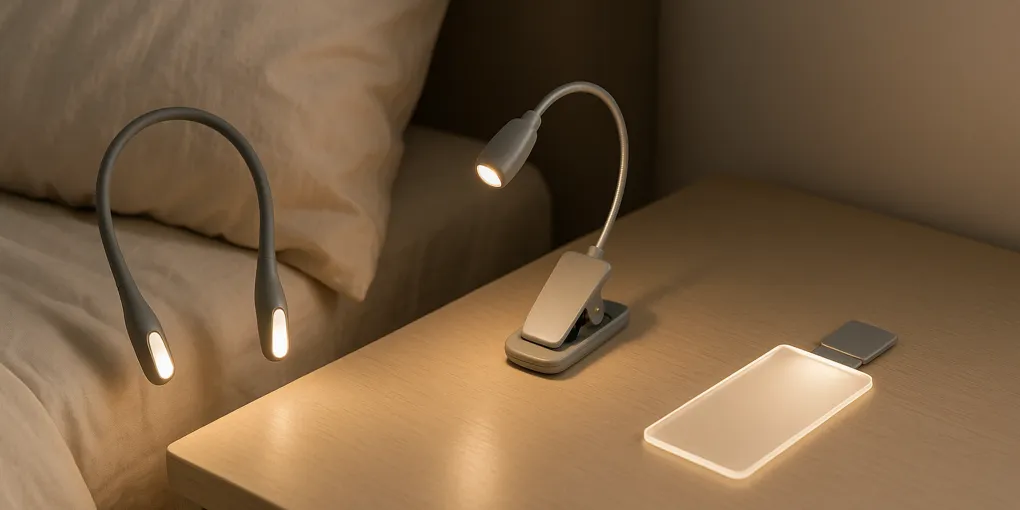
Quick picks
HECDSTLY clip reading lamp for headboard placement
COLORLIFE rechargeable gooseneck clip lamp for flexible aiming
OORUN rechargeable bedside table lamp for tabletop placement
A bedside reading light is first a placement decision. The right option has a stable place in the room, reaches the material you read, and has controls and charging arrangements you can live with. A headboard clip, a flexible gooseneck clip, and a small tabletop lamp solve different placement questions, so compare the available surface before comparing a feature list.
This guide limits the comparison to current product identity, attachment, aiming, controls, charging, and return checks. It does not rank the products by sleep, eye comfort, safety, or partner outcomes. Room layout, bedding, reading position, and the chosen brightness setting all vary. Use the current listing and a return-period check in your own setup instead of assuming a product photo represents your room.
For related shared-bedroom decisions, see the guides to white noise machines, adjustable bed frames, and sunrise alarm clock setup. Those pages address different equipment and placement questions.
Quick comparison: three verified Amazon product destinations
| Product and direct Amazon destination | Placement to compare | Start here if | Check before choosing |
|---|---|---|---|
| View the HECDSTLY clip reading lamp for headboard placement on Amazon | A headboard or similar stable edge | You have a clear clip point close to the reading position. | Clip clearance, the surface thickness, reach, control location, charging connection, and return terms. |
| View the COLORLIFE rechargeable gooseneck clip lamp for flexible aiming on Amazon | A stable bedside edge where a flexible neck can be aimed | You want to compare a clip with an adjustable gooseneck arrangement. | The exact clip fit, reach from the chosen edge, cable routing, controls, and included components. |
| View the OORUN rechargeable bedside table lamp for tabletop placement on Amazon | A clear, stable bedside-table surface | You prefer to compare a freestanding form instead of a clipped one. | Table footprint, charging method, control layout, current seller terms, and return information. |
These are three verified direct product destinations, not universal recommendations. Check the exact Amazon listing for the current model name, included parts, documentation, and seller information before buying. Do not substitute a similarly named product when comparing attachment or charging details.
Start with the available mounting or table surface
Before choosing a lamp, map the surfaces that are actually available. A clip model needs a firm edge with enough clearance for the clamp. That edge might be a headboard, a shelf, or part of a bedside table, but the current product photos and documentation should be used to judge whether the clamp can meet that surface. A flexible arm does not solve a weak attachment point; it only changes where the head can be positioned after the clip is secure.
A tabletop model needs a different check. Measure the usable part of the bedside surface after everyday items such as a phone, water glass, or charging dock are in place. Think about where the charging cable would sit and whether a cord would have to cross a route used to get in or out of bed. The aim is not to create a perfect setup on paper; it is to rule out a form that has no sensible place to live.
Make this decision before comparing minor listing details. A lamp with a compelling description is not useful if the clip cannot close around the available edge, the tabletop base has nowhere stable to sit, or the charging arrangement conflicts with the room. Keeping the first comparison focused on placement prevents feature lists from hiding a basic fit problem.
HECDSTLY clip lamp: compare it with a headboard edge
The HECDSTLY Rechargeable LED Desk Lamp, Clip Reading Light for Headboard is the direct product to inspect when the likely attachment point is a headboard or another firm nearby edge. Begin with the clamp, not the bulb or a marketing image. Look at the current listing photos and dimensions, then compare them with the thickness and shape of the surface you expect to use.
Check the space behind the edge as well as the top of it. A clamp can require room on both sides, and upholstered or unusually shaped surfaces may not provide the same contact as a flat shelf. If the location is near a wall, consider whether the lamp body and charging connection would have clearance. If the product page does not make a relevant detail clear, treat that as an unresolved comparison point rather than filling the gap with an assumption.
Once the clip location seems plausible, assess reach. Sit in the position where you usually read and picture where the lamp head would need to point. The useful question is whether the head can be positioned over the material without relying on a stretched arm or a clip placed at the very edge of its grip. Keep the current Amazon return terms handy while testing fit after delivery, because surface compatibility is specific to the room.
COLORLIFE gooseneck clip lamp: compare the flexible arm and clip together
The COLORLIFE Desk Lamp Clip On Light, Rechargeable Gooseneck is the direct product to inspect when you want a clip model with a flexible-neck arrangement. The flexible section is only one part of the decision. First confirm that the chosen bedside edge can accept the clip, then consider whether the gooseneck gives a useful range from that exact anchor point.
Look for an attachment location that lets the arm reach the reading position without forcing the cable, lamp body, or clamp into an awkward path. A bedside shelf may be more suitable than a narrow ledge; a broad headboard may provide a different starting point than a small table edge. These are room-specific observations, not promises about any particular model. Use the product listing to confirm what is included and how the exact item charges.
Control placement matters in a flexible setup because the control may sit at the lamp head, the body, or along the cable. Check the current listing and any manual available for the exact model rather than inferring the arrangement from a related product. During the return period, test the clip, aiming range, charge connection, and control reach as one system. If one part requires an inconvenient compromise, compare the tabletop option instead of trying to force the clip setup to work.
OORUN tabletop lamp: compare it with the usable bedside surface
The OORUN Touch Bedside Table Lamp, RGB Rechargeable is the direct product to inspect when a freestanding bedside lamp is easier to place than a clip. Start by identifying a level surface that has enough room for the base and leaves space for ordinary bedside items. A tabletop light avoids the clamp-fit question, but it introduces a footprint, cable, and control-location question.
Review the exact Amazon listing for the current charging method, included components, and product dimensions. Then compare those details with the table you have rather than with an idealized nightstand. A small surface may need room for a charging cable or for access to the lamp controls. If the listing shows multiple versions, confirm that the selected page describes the precise OORUN model before using any detail in the comparison.
For a freestanding option, also decide where it will be stored or charged when not in use. A clear plan for the table and cable is more useful than an assumption that a compact product will fit every bedside arrangement. Current return and seller information should remain part of the final decision, since those terms can change and may be different across listings.
Compare controls, charging, and returns without guessing
After placement narrows the list, compare the details that affect ordinary use. Look at the control layout for each exact model and ask whether the controls are reachable from the reading position. Check the product page for the charging connection, included cable information, and any current documentation. Avoid treating a photo, an old review, or a similarly named item as confirmation of what arrives with the listing you are considering.
Next, trace a realistic charging route. For a clipped lamp, this may mean following a cable from the headboard or bedside edge to an outlet or charging station. For a tabletop lamp, it may mean leaving room around the base and cable. Keep everyday routes in mind, including where feet, bedding, and bedside drawers move. The goal is a tidy setup that can be checked in the actual room, not a claim about how any room will function.
Finally, read the seller and manufacturer information for the exact listing. Return eligibility, condition requirements, included accessories, and warranty information are current-listing details. Save the relevant information before ordering, keep packaging until you have checked fit, and review the terms again if the delivered model or included parts differ from what you expected.
A practical return-period comparison
Use a short, repeatable check after delivery. Place the lamp at the intended headboard edge, bedside edge, or tabletop. Confirm that the attachment or base is stable on that specific surface. Sit in the position where you normally read and adjust the lamp only within the range that the product and surface allow. Then check whether the controls and charging connection are reachable without moving unrelated bedside items.
For the HECDSTLY headboard clip option, the check centers on clamp clearance, reach, and the charging route from the selected edge. For the COLORLIFE gooseneck clip option, add the arm’s useful range from the same secure attachment point. For the OORUN tabletop option, focus on base placement, available table space, and access to the controls and charging connection. Record any fit question while the applicable return terms are still available.
Do not turn this into a product-test ranking. The purpose is to learn whether one verified product form has a workable location in one particular room. If the attachment point is unstable, the base consumes too much usable surface, or the control and charging arrangement does not work for you, that is enough reason to return to the placement comparison.
When a bedside reading light is not the category to compare
Personal reading lights are separate from other bedroom equipment. If the question is about a wake-up device, use the sunrise alarm clock setup guide rather than treating a reading light as the same category. If the question is about room sound, controls, or a display, the white noise machine buying guide covers different product decisions. If the furniture itself limits positioning or bedside reach, the adjustable bed frame buying guide can help identify those constraints first.
Medical, circadian, eye-health, sleep-condition, safety, and partner-outcome questions are outside this comparison. This page is limited to neutral product identity and placement checks for a shared-bedroom reading setup.
FAQ
Which bedside reading-light setup should I compare first?
Start with the available attachment point or table surface. A headboard clip, flexible clip, and tabletop lamp each need a different stable location, so choose the form that has a plausible place in your room before comparing smaller details.
What should I check before keeping a bedside reading light?
Check attachment fit, aiming range, control placement, charging or cord routing, the exact product identity, and the current seller and manufacturer return information. Keep the packaging and relevant return information until you know whether the placement works.
Why should I check the exact Amazon listing?
The exact listing is where you can confirm the selected model, included parts, power details, seller terms, and return information. Those details can vary across products with similar names, so use the current page rather than a generic image or an older description.