White Noise Machine vs Fan: Which Sound Tool Belongs Beside the Bed?
Compare white noise machines, fans, and simple sound routines for masking intermittent bedroom noise without adding new sleep problems.
For readers comparing sleep-product options before buying.
Buyer's Guide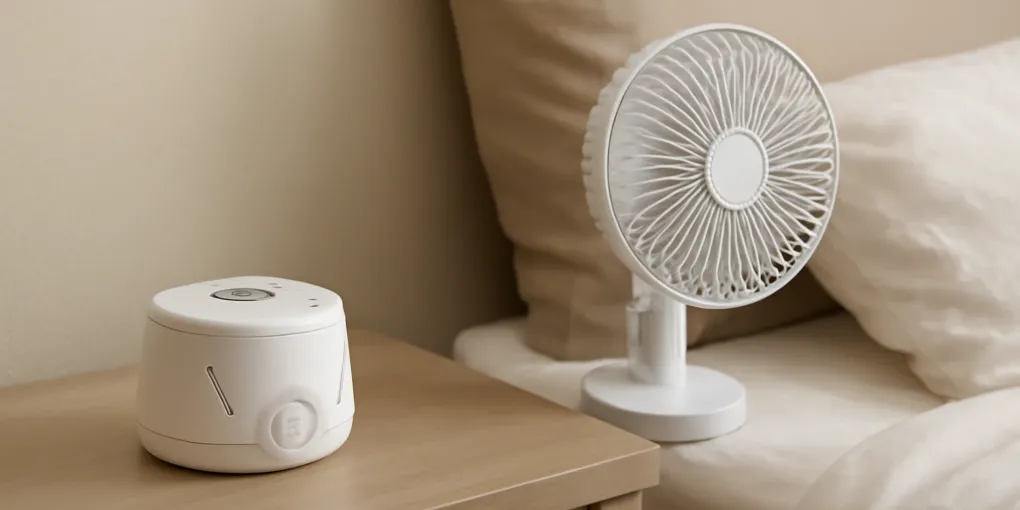
LectroFan Classic white noise machine
Best steady maskingProduct type: white noise machine
Quick picks
| Product | Key Specs |
|---|---|
| See price on Amazon |
|
| See price on Amazon |
|
| See price on Amazon |
|
Product availability, certifications, and retailer details can change; check the current Amazon page before buying.
A fan and a white noise machine solve different noise problems. A fan moves air and creates a broad mechanical sound. A dedicated sound machine is better when you need steady masking without airflow, dust movement, or winter chill. The buying decision should start with the noise you are trying to cover: hallway doors, a snoring partner, traffic pulses, upstairs footsteps, or your own tinnitus-like quiet-room sensitivity.
Sound tools solve different bedroom problems: a fan moves air and creates broadband noise, while a white-noise machine gives repeatable sound without draft or seasonal airflow changes. Choose by the noise source, room temperature, outlet placement, cleaning tolerance, cord reach, speed settings, and whether the bedside setup must travel.
Quick picks
- Use a machine for steady masking: Search Amazon for LectroFan Classic white noise machine when hallway doors, traffic pulses, or upstairs steps need steady masking.
- Use a fan when airflow is useful: Search Amazon for Honeywell QuietSet tower fan when air movement and a steady mechanical sound solve the same hot-room problem.
- Keep volume modest and consistent: Search Amazon for Macks Ultra Soft earplugs when travel, snoring, or occasional construction noise needs a no-device backup.
Comparison shortlist
| Buy/search action | Best fit | Main caveat |
|---|---|---|
| Search Amazon for LectroFan Classic white noise machine | Measuring the actual bedroom problem before spending more | Check dimensions, cleaning instructions, and return terms before ordering. |
| Search Amazon for Honeywell QuietSet tower fan | Changing the layer closest to the sleeper | Avoid products that hide basic materials or warranty exclusions. |
| Search Amazon for Macks Ultra Soft earplugs | Solving the specific comfort bottleneck | Do not let a gadget replace fixing obvious light, sound, or climate problems. |
Match the sound to the interruption
Use steady broadband sound for unpredictable spikes such as doors, voices, and traffic. A fan can work when the noise source is mild and airflow is welcome. For bass-heavy footsteps or a snoring partner, masking may need to be closer to the listener, lower in pitch, or paired with soft earplugs.
Volume placement and timer choices
Place the device between the bed and the noise source when possible. Start at the lowest setting that makes interruptions less noticeable, then avoid creeping louder each week. A timer is useful for settling, while all-night sound is better for noise that continues after midnight.
When earplugs beat electronics
Earplugs can be the simpler answer for travel, hotel hallways, or a partner who dislikes sound machines. Fit matters more than maximum rating because uncomfortable plugs get removed. Keep a backup pair in the nightstand if storms, guests, or street work create occasional noise.
Travel and nursery-adjacent cautions
Travel machines should have physical controls and enough battery for a full night. In small rooms, avoid placing any sound source right beside a child or directly next to your own ear. The goal is masking, not creating a new loud exposure.
Practical score for this purchase
| Criterion | Weight | How to apply it |
|---|---|---|
| Research | 30% | Use product specifications and room observations before trusting broad claims. |
| Evidence quality | 25% | Give more weight to measurable fit, material, noise, light, or climate details than to vague comfort language. |
| Value | 20% | Include accessories, subscriptions, replacement parts, and return friction. |
| User signals | 15% | Keep the product only if it improves the exact morning or bedtime problem you recorded. |
| Transparency | 10% | Prefer brands that publish dimensions, materials, care instructions, warranty limits, and trial terms. |
Sound character, placement, and partner tolerance
The best masking sound is usually boring. A machine with a smooth fan-like profile can cover hallway doors or traffic pulses without drawing attention to itself. Looping ocean or rain tracks may be relaxing for some people, but obvious repeats can become distracting. Put the sound source between you and the noise when possible, not directly beside your ear. A lower volume closer to the door or window is often more comfortable than a louder device on the pillow side.
Fans add airflow, which can help warm or stuffy rooms, but they also move dust and can dry eyes or noses for some sleepers. A dedicated sound machine is cleaner when you only need acoustic masking. If a partner dislikes constant sound, try a timer, a lower-frequency profile, or soft earplugs for the person most affected by intermittent noise. For children, shift the device farther from the head and keep volume conservative because small rooms can make a harmless-looking setting louder than expected.
Controls and sound features worth paying for
Pay for a stable fan-style sound profile, physical volume controls, a dark display, and a memory setting before paying for dozens of nature tracks. A LectroFan-style machine is useful because it creates steady electronic fan or white-noise profiles without an obvious short loop. For travel, battery runtime and a real power button matter more than an app. In a shared room, avoid bright status LEDs, chirpy button tones, and phone pairing that can disturb the person you are trying not to wake.
Product details that separate good machines from noisy clutter
For a dedicated machine, prioritize non-looping sound generation or a loop that is long enough not to draw attention. Physical buttons matter because bedtime adjustments should not require unlocking a phone. A clear volume range is useful, but maximum loudness is not the goal. Look for a stable base, dimmable or no indicator light, and a cord that can reach the outlet without crossing a walkway. Travel machines should have a battery estimate that covers a full night, not only a short nap.
For fans, sound is only one part of the decision. Blade noise, oscillation clicks, dust buildup, and lighted controls can all become sleep irritants. A tower fan saves floor space but may be harder to clean deeply. A small air circulator can be quieter and easier to aim, but the airflow may hit one partner more than the other. If you need air movement and masking, a fan is efficient. If the room is already cool or dry, a sound machine avoids adding a draft.
Earplug backup without overusing volume
Soft foam earplugs are useful for travel, snoring, storms, and one-off noise spikes, but they are not a reason to blast a bedside machine. Fit the plug correctly, replace dirty pairs, and stop if the canal gets irritated. If you use earplugs often, keep a quieter alarm backup such as vibration, a sunrise clock, or a partner-safe sound cue. The combination that works for many apartments is modest machine volume near the door or window plus earplugs only on the worst nights.
Room examples
In an apartment with hallway doors, put the machine on a dresser between the bed and door and start with a fan-like sound. For street noise, place it closer to the window side and avoid bright controls facing the pillow. For a snoring partner, masking may help mild changes in volume, but heavy snoring often needs a separate health or sleeping-arrangement conversation. For a hot bedroom, choose the fan first because it addresses air movement and sound together. For winter dryness, choose the machine first and keep airflow off the face.
Cleaning and nightstand friction
Fans collect dust and need enough space for airflow, so they are not ideal on a crowded nightstand. Sound machines collect less dust but can add cable clutter and tiny status lights. Before buying, decide where the device will sit, which outlet it will use, and whether the controls are reachable without turning on a lamp. A good sound tool should disappear into the room after setup.
One final purchase check: confirm the product dimensions, care rules, seller return terms, and whether the item can be cleaned or adjusted after the first week. Those practical details decide whether the sleep product remains useful after the first comfortable night.
Test the chosen sound at your normal bedtime and again during the noisiest expected hour. A setting that masks a quiet room may be inadequate for traffic, while excess volume creates its own problem.
FAQ
Is white noise better than a fan?
Neither is universally better. A machine is better for sound masking without airflow. A fan is better when air movement and a steady mechanical sound are both useful.
How loud should a white noise machine be?
Use the lowest volume that masks interruptions. Place the device between the bed and the noise source when possible rather than turning up a unit beside your ear.
Should the sound run all night?
Run it all night if the noise continues all night. Use a timer if the main problem is falling asleep or if a partner dislikes constant background sound.