Fitted Sheet Pocket Depth: Measure a Thick Mattress Before You Buy
Measure your complete mattress stack, compare it with the exact fitted-sheet pocket range, and avoid corners that pop off or loose fabric that bunches.
For readers troubleshooting a sleep setup without changing prescribed care.
Protocol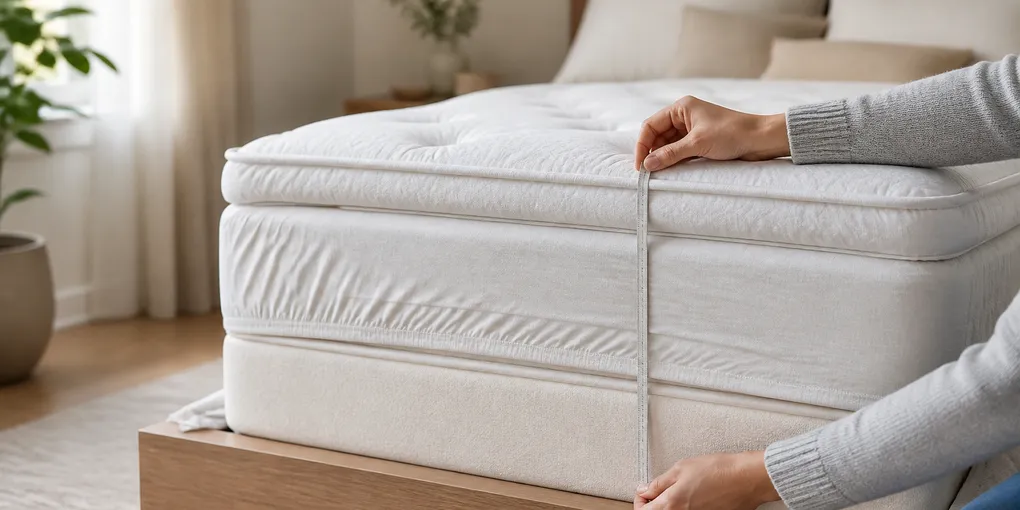
When a fitted-sheet corner works loose overnight, the mattress label may not explain why. The sheet has to wrap around the bed as it exists now: mattress, pillow top, topper, protector, and pad. Measure that complete stack, then compare it with the stated fit range for the exact sheet size. A generic “deep pocket” label is only a search term.
Measure the bed you actually make
Strip off the fitted sheet, flat sheet, blankets, and pillows. Leave every layer that normally sits below the fitted sheet in place:
- the mattress and any attached pillow top or Euro top;
- the topper you sleep on;
- the protector or mattress pad beneath the sheet.
At one long side, run a flexible tape from the lowest edge the elastic must reach to the highest point of the sleep surface. Keep the tape vertical rather than following the curve of a plush side panel. If the top looks uneven or compressed, repeat the measurement at the head, center, and foot and keep the largest number.
The Company Store and Saatva both tell sheet shoppers to measure the sleep surface with a topper or protector in place when those layers remain under the fitted sheet. It is an easy detail to miss when the mattress itself was sold at a smaller height.
Width and length still come first. Confirm the bed is actually the selected twin XL, full, queen, king, or other size before comparing pocket depth. Generous corners cannot make a queen sheet fit a full mattress correctly.
Translate the listing into one useful number
Brands do not use “deep pocket” in one universal way. Look for language such as “fits mattresses up to 16 inches” or a clearly stated accommodation range for the size and collection you selected.
Keep these details together while you compare listings:
| Record | What it answers |
|---|---|
| Mattress width and length | Is this the correct sheet size? |
| Tallest point in the full stack | How far must the corner reach? |
| Published accommodated depth | Does the maker describe this stack as within range? |
| Pocket seam depth, if listed separately | Is the listing describing fabric construction rather than fit? |
| Exact size, collection, and variant | Are you reading the specifications for the item in your cart? |
Pocket seam depth and accommodated mattress height can sound interchangeable, but a seller may distinguish them. The Company Store, for example, separates its pocket measurements from the mattress heights its sheets are described as fitting. Use the maker’s fit language when it is available, and ask the seller when the chart leaves the distinction unclear.
Include the layers that cause the surprise
A topper is the obvious addition, but a quilted pad or thick protector can turn a comfortable margin into a close fit. Count a layer only if the fitted sheet wraps over it. Blankets and comforters sit above the sheet and do not belong in the stack measurement.
Split beds need two measurements. The twin XL halves of a split king can carry different toppers or compress differently over time, so check each side rather than assuming a matched pair still has matching height.
An older fitted sheet that stays put can offer a clue. Lay it flat and measure from the top edge of a corner to the pocket seam, then note its construction and elastic placement. Treat that as context, not as a substitute for the new maker’s stated fit range; fabric, corner shape, and elastic tension can change how two sheets with similar-looking pockets sit on the same bed.
Leave margin at an “up to” limit
“Fits up to” marks a boundary, not spare room. A stack that lands exactly at the published maximum gives the corner less margin for the distance around the mattress edge and underneath it. The shape of a pillow top and the loft of a topper can also change that path even when two beds share the same vertical measurement.
When your number is close to the stated limit, read the dimension chart and return terms before opening or laundering the sheet. If the product page offers only a broad deep-pocket badge, look for a sizing guide or ask the seller for the accommodated mattress height.
Too shallow is not the only mismatch. A corner stretched to its limit may creep upward, while a much looser sheet can leave fabric gathering across the surface. You are looking for all four corners to stay below the mattress edge with the center lying smooth.
Try one sheet before changing the whole set
Make the bed with one new fitted sheet and leave the rest of the setup alone for a few nights. In the morning, look for four simple signs:
- All four elastic corners remain below the mattress edge.
- The center stays reasonably smooth instead of collecting in folds.
- The topper or protector has not shifted underneath.
- The bed is still practical to remake after the sheet is washed.
If a corner comes free, remeasure with every under-sheet layer in place and confirm the selected size before buying a different pocket category. Testing one sheet first keeps a measurement mistake from becoming a whole-linen-closet mistake.
A note on what the numbers can prove
This guide brings together current retailer and manufacturer sizing instructions; it does not test a particular sheet or predict how its elastic and corner construction will behave on every mattress. Use the exact product’s current sizing, care, and return information for the final fit decision.