Bed Cooling System Buying Guide: Fan, Water Pad, or Passive Cooling Layer?
Compare bed fans, water-circulating pads, and passive cooling layers by heat source, noise, maintenance, and mattress fit.
For readers comparing sleep-product options before buying.
Buyer's Guide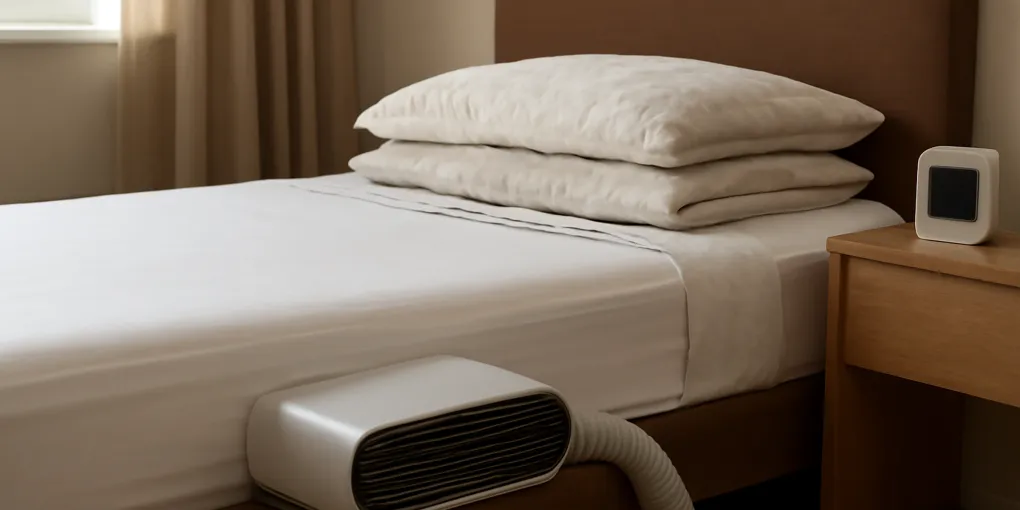
BedJet 3 climate comfort system
Best air-based optionProduct type: bed fan and air climate system
Quick picks
| Product | Key Specs |
|---|---|
| See price on Amazon |
|
| See price on Amazon |
|
| See price on Amazon |
|
Product availability, certifications, and retailer details can change; check the current Amazon page before buying.
A bed cooling system can be useful when the mattress traps heat faster than the bedroom cools down. But the category is easy to overbuy. A fan that blows under the sheet, a water-circulating pad, and a passive cooling layer solve different heat problems, and each adds a different kind of friction to the bed.
If your sheets are the obvious heat source, start with the cooling sheets versus mattress pad guide. If your problem is light, sound, or morning timing rather than heat, a cooling device will not replace basics like the sunrise alarm clock setup guide. This guide is for the buyer who already knows that the bed surface gets too warm.
Quick picks
- Choose airflow when you hate water maintenance: Search Amazon for BedJet 3 climate comfort system if you want air under the covers and can tolerate hose placement and fan sound.
- Choose water circulation when the mattress surface is the heat trap: Search Amazon for ChiliSleep Dock Pro sleep system if you want active cooling under the body and will maintain the reservoir and pad.
- Choose a passive layer for a low-friction first step: Search Amazon for Slumber Cloud cooling mattress pad if you want a washable surface change before adding a powered device.
Match the product to the heat source
Start by locating the heat. If your back or hips feel hot against the mattress, the heat source is below you, and a water-circulating pad or passive mattress pad makes more sense than a bedside fan. If you feel stale air under the comforter or wake up sweating around the torso, an air-based system may help because it moves air through the bedding stack.
If the whole room is warm, no bed gadget can fully replace ventilation, shade, or air conditioning. Bedroom heat is also affected by mattress foam, protector type, comforter fill, pajamas, and whether a partner radiates heat into the same bedding. Do not buy the most complicated system until you know which layer is failing.
Bed fans and air climate systems
A bed fan sends air under or across the bedding. The upside is speed: moving air can feel cooler quickly, and there is no water reservoir to clean. The tradeoffs are hose placement, fan sound, visible hardware near the bed, and whether airflow dries your skin or bothers a partner. Some sleepers love the sensation; others feel like the bed is drafty.
Before buying, check under-bed clearance, where the nozzle sits, whether the system works with your bed frame, and whether it needs a special sheet or cloud sheet to distribute air. Air systems can also move warmth in winter, which improves value if you share a cold bedroom but want different blanket levels.
Water-circulating pads
A water-circulating pad targets the surface under the body. That is useful when memory foam or a thick mattress protector traps heat. The pad sits between sleeper and mattress, while a control unit moves cooled or warmed water through channels. The benefit is direct surface control; the cost is maintenance.
Judge these systems by daily friction. Where will the control unit sit? Can you refill it without moving furniture? How often does the brand recommend cleaning? Are replacement pads and cleaning supplies easy to buy? Can you feel tubing or channels through a fitted sheet? A water pad that cools well but annoys you every week will not stay in use.
Passive cooling mattress pads
Passive pads and phase-change fabrics can buffer temperature swings, but they are not powered air conditioners. They are best when the problem is mild heat buildup from a protector, foam comfort layer, or plush bedding. They are also quieter, easier to wash, and usually easier to return than powered systems.
The key is expectation control. A passive pad may feel cooler at first contact and reduce the sweaty surface feeling, but it cannot keep pulling heat away forever in a hot room. It is still worth trying first if your current bed is only slightly too warm or if you do not want cords, hoses, reservoirs, or fan sound.
Practical score for this purchase
| Criterion | Weight | How to apply it |
|---|---|---|
| Research | 30% | Separate room heat, bedding heat, mattress-surface heat, and partner heat before choosing a device type. |
| Evidence quality | 25% | Trust measurable specs such as noise, dimensions, water-maintenance steps, return terms, and washable layers over vague cooling language. |
| Value | 20% | Include replacement pads, cleaning supplies, electricity, subscriptions, return shipping, and whether the device works in both hot and cold seasons. |
| User signals | 15% | Keep only systems that reduce wake-ups without adding noise, maintenance, drafts, or partner conflict. |
| Transparency | 10% | Prefer brands that publish pad dimensions, cleaning instructions, warranty limits, replacement-part availability, and compatibility notes. |
Noise, light, and bedroom friction
Powered systems add sound. A low fan hum can be acceptable if you already sleep with white noise, but it can be disruptive if you need silence. Control units may also have indicator lights, remote controls, app settings, or scheduled modes. Those details are not minor if your bedroom already has too many devices.
Place the unit before the return window closes and live with the cord routing. If the hose crosses a walkway or the control unit blocks a drawer, you have found a real problem. A quieter passive pad may be the better purchase even if the active system cools more aggressively.
Partner and bed-size decisions
Couples should avoid assuming one cooling solution fits both sides. One sleeper may want airflow while the other wants a warmer blanket. A twin or half-bed system can be more practical than a full-bed pad if only one person overheats. For bed fans, check whether airflow stays on one side or inflates the whole top sheet.
If you choose a water pad for two people, confirm whether dual-zone controls require a specific size, extra components, or extra maintenance. Dual-zone comfort sounds useful, but it is still a device with hoses, water, cleaning, and space requirements.
Mattress and protector compatibility
Cooling systems work differently on foam, hybrid, and pillow-top mattresses. A thick memory-foam comfort layer can still feel warm even with cool sheets because the heat is held close to the body. A waterproof protector can also trap warmth and reduce the benefit of a breathable pad. Before buying a powered system, test one night without extra blankets and with the thinnest acceptable protector so you know whether the mattress or the bedding stack is the problem.
For water pads, check mattress depth and fitted-sheet tension. A pad that shifts, wrinkles, or makes the fitted sheet pop off will become annoying quickly. For bed fans, check whether the hose can stay in place with your bed frame and whether the airflow exits near your feet, torso, or whole sheet. For passive pads, read the wash instructions and skirt depth; a cooling layer that cannot fit securely over a tall mattress is not a good value.
App, remote, and subscription friction
Some active systems rely on remotes, apps, schedules, or cloud-connected features. That can be useful if you want the bed warm at bedtime and cooler later, but it also adds another device to manage in the bedroom. Check whether the core temperature controls work without a subscription or constant phone use. If a partner goes to bed earlier, make sure adjustments will not require bright screens, voice assistants, or noisy button presses.
A simpler product can win if it solves the actual heat problem with less interaction. A passive pad has no app. A bed fan with physical controls may be easier for guests or a shared bedroom than a phone-only setup. Treat software convenience as a bonus, not as the reason to overlook noise, maintenance, or poor fit.
Return-window test plan
Test in the hottest normal condition, not on an easy night. Use your usual pajamas, sheets, and comforter for the first two nights so the cooling system is the only major change. Write down three things: how fast the bed felt comfortable, whether you woke because of heat, and whether the device added noise or maintenance you noticed.
On night three, change one variable. For a bed fan, adjust airflow direction or fan level. For a water pad, adjust the target temperature modestly rather than chasing the coldest setting. For a passive pad, test whether removing a thick protector or blanket changes the result. The goal is a repeatable setup, not the coldest possible bed.
FAQ
Is a bed fan better than a cooling mattress pad?
A bed fan is better when trapped air under the covers is the problem. A cooling mattress pad is better when heat builds under your back, hips, or shoulders against the mattress surface.
Do water-cooling mattress pads need maintenance?
Yes. Judge the system by reservoir access, cleaning directions, hose routing, replacement pad availability, and warranty support before buying.
What should hot sleepers try before buying powered cooling?
First reduce heat from sheets, protectors, comforters, pajamas, and room temperature. If the bed is only mildly warm, a passive cooling pad may solve the problem with less friction.